Christian roots of the Christmas tree
O Christmas Tree, O Christmas tree,
How lovely are your branches!
-“O Christmas Tree”
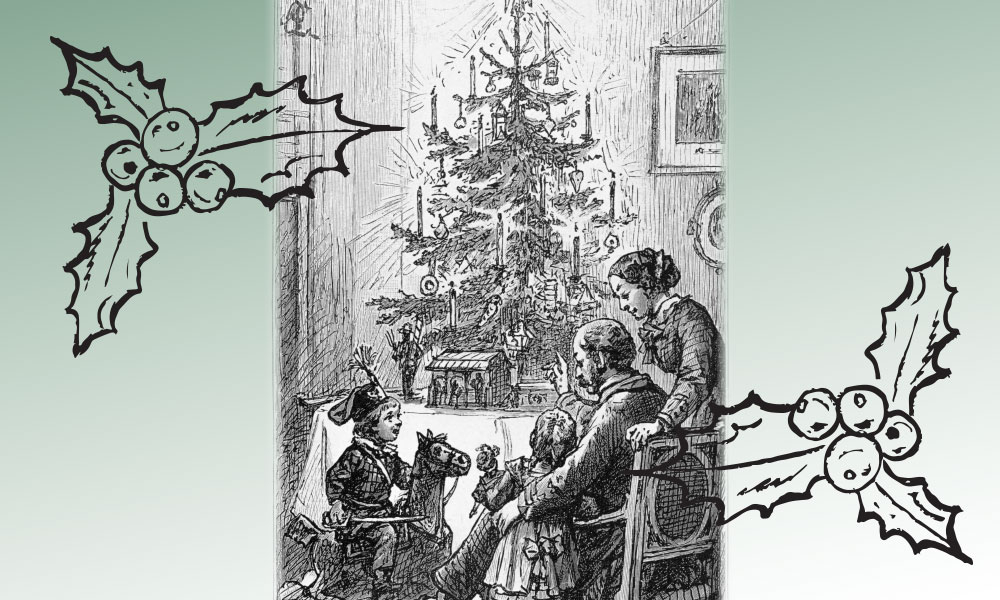
One of the most beloved and enduring symbols of Christmas, the Christmas tree has extensive Christian roots – pun intended.
The earliest account connecting an evergreen tree to Christmas comes from the life of St. Boniface, an eighth-century missionary who brought Christianity to Germany. According to legend, St. Boniface stopped one of the local chieftains from sacrificing his son to their pagan gods. The sacrifice was to take place under a large oak tree, which was considered sacred to their god, Thor. In order to prove the pagan gods powerless, Boniface cut the tree down with an ax, stunning onlookers.
St. Boniface didn’t stop there. He then preached the Gospel to them, using a little fir tree nearby as a tool for evangelization. Pointing to it, he said, “This little tree, a young child of the forest, shall be your holy tree tonight. It is the wood of peace … It is the sign of endless life, for its leaves are ever green. See how it points upward to heaven. Let this be called the tree of the Christ-child; gather about it, not in the wild wood, but in your own homes; there it will shelter no deeds of blood, but loving gifts and rites of kindness.” From this story, we clearly see the idea of bringing a fir (evergreen) tree into one’s home as a symbol and reminder of the Christ-child who is the giver of everlasting life.
A far less known story of the origin of the Christmas tree concerns medieval mystery plays that were popular across Europe. These plays focused on representing Bible stories to the faithful. In the medieval Church, the feast of Sts. Adam and Eve was celebrated on Christmas Eve (Dec. 24), connecting their fall, repentance, and the fulfillment of God’s promise to send a Savior with Christmas (Dec. 25). In the final days of Advent, it was common for towns to host plays that reenacted the story of Adam and Eve in the Garden of Eden.
Quite fittingly, the staging for these plays included fir trees decorated with apples to symbolize Eden with its tree of life and the forbidden fruit. Even as the mystery plays waned in popularity after the Middle Ages, the German people continued to decorate fir trees at Christmastime, adding Communion-like wafers to the tree, contrasting the eating that brought death (fruit of the tree of knowledge of good and evil) and the eating that brings life (the Eucharist). Over time, additional decorations were added and the symbolism of the fall and redemption faded.
While other influences have contributed to our modern Christmas tree tradition, what’s common to all is their rootedness in the telling of the Christian story about what God has done for our salvation. This history invites us to see our trees not just as decorative elements in the celebration of the season, but as visible reminders of what is at the heart of these sacred days.
This Christmas, take time to honor the (small s) sacramental role the Christmas tree plays in reminding your family of the Christ-child, who came to destroy the ancient curse of sin and to give Adam and Eve’s descendants new and everlasting life. Consider gathering loved ones to offer one of the beautiful Catholic prayers of blessing after the tree has been decorated, or at another suitable time such as Christmas Eve or Christmas Day.
The Christmas tree is the sign of endless life, for its leaves are ever green.
See how it points upward to heaven.