St. Gregory of Narek (c. 945-1010)
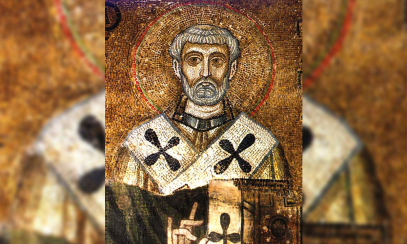
Revered in both the Catholic Church and the Armenian Apostolic Church, St. Gregory of Narek was a mystical and lyrical poet, monk and theologian. Born in a village on the shores of Lake Van in present-day eastern Turkey, his mother died when he was young. After being widowed, his father was ordained a bishop and appointed primate of the diocese of Andzevatsik. Gregory and his older brother were then sent by their father to the monastery at Narek where they received religious formation under Ananias of Narek, their maternal great uncle who was the monastery’s founder.
St. Gregory of Narek went on to be ordained as a priest around the year 977 and began teaching theology to others at the monastery in Narek until his death. Little else is known of his life, apart from his writings. Some scholars suggest that Gregory lived a more or less secluded life, while others suggest that he was well aware of current events outside the monastery.
He is most known for his Book of Lamentations, a book of lyrical spiritual prayers that is used daily as a household prayerbook in Armenian families. Speaking about his legacy, Pope Francis said that in the monastery, Gregory of Narek “learned to peer into the depths of the human soul” and that in his spiritual writings he fused “prayer and poetry together.” Narek’s writings have had a powerful influence on all Armenian literature.
After his death, Gregory was buried inside the walls of the monastery at Narek. The monastery was abandoned during the Armenian genocide in 1915 and was later demolished in 1951, with the site subsequently being turned into a mosque.
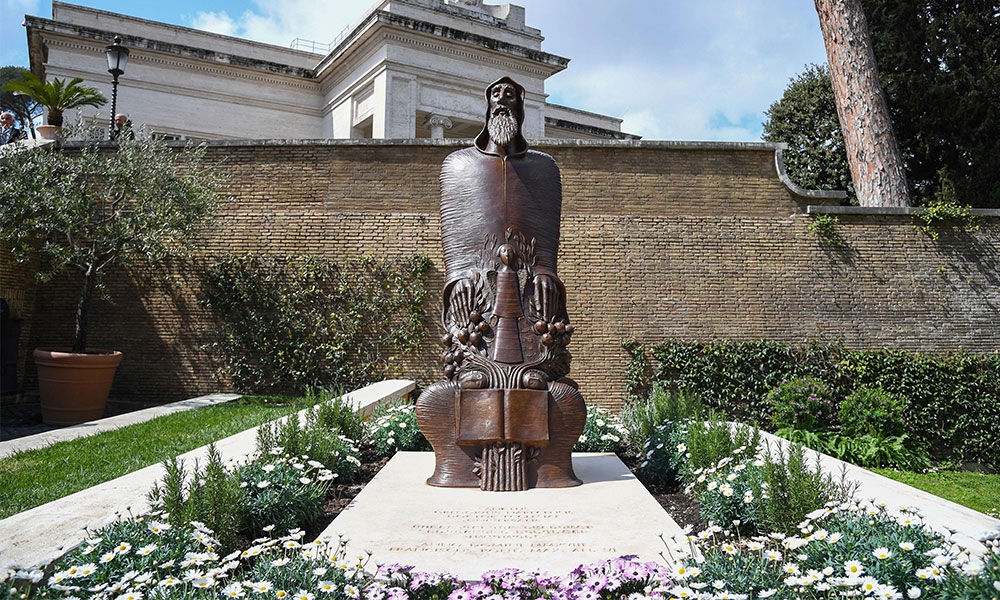
In 2015, Pope Francis declared St. Gregory of Narek as a Doctor of the Church. The timing of this declaration was intentional and significant. In raising this illustrious saint to the status of Doctor of the Church, Francis both acknowledged his immense contribution to the spirituality of the universal Church and marked the hundredth anniversary of the Armenian Genocide, during which one and a half million Armenian Christians living in the Ottoman Empire were killed between the spring of 2015 and autumn 2016. On February 2, 2021, Pope Francis also inscribed St. Gregory of Narek as an Optional Memorial in the Roman Calendar.
By declaring St. Gregory a Doctor of the Church and including him in the universal Roman Calendar, the Church is inviting us to rediscover the riches of the Eastern Christian tradition. Speaking to participants of the Jubilee of Oriental Churches, Pope Leo XIV said that “The contribution that the Christian East can offer us today is immense! . . . Your traditions of spirituality, ancient yet ever new, are medicinal. In them, the drama of human misery is combined with wonder at God’s mercy, so that our sinfulness does not lead to despair, but opens us to accepting the gracious gift of becoming new creatures who are healed, divinized and raised to the heights of heaven.”
From the writings of St. Gregory of Narek:
“You are called Shepherd”
O God, I return to you with the same sighs of my imperiled heart, presenting my own words intoned in the same pitch. I seek your compassion, O Giver of all gifts, with my soul in anguish, always in peril, like one who is dead; I turn to you, living and immortal God, while I confess my iniquity before your glory, my evil deeds—by which I am overwhelmed and not comforted, ashamed rather than confident, having abandoned my vow and forgotten the sacred tradition—before your goodness. The parable that employs the metaphor of the lowly sheep left utterly numbed—lost on a mountain, beyond reach, wandering among ferocious beasts, demons, and monsters, not close in the slightest to the one flock—applies doubly to me. I have no words with which to recount my excruciating pain, no agile hands to communicate like the mute. Whereas you who alone are praised by those from timeless beginning to the newborn, found me, as the singer of petitions has it, a sinner who wandered off into utter darkness. You are called Shepherd because of your willing, caring oversight. You not only cared but also sought; you not only found, O worker of miracles, but you –who is ineffable in bestowal of love—lifted me upon your life-giving shoulder, you who rank us with the heavenly hosts to become heirs to your Father.
Excerpted from “Prayer 15,” From the Depths of the Heart: Annotated Translation of the Prayers of St. Gregory of Narek by Abraham Terian