This is the Night
An Exploration of the Easter Proclamation
An Exploration of the Easter Proclamation
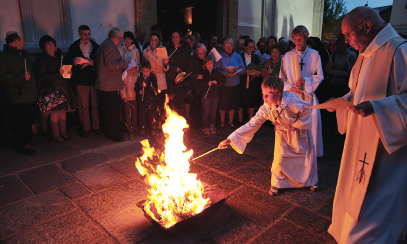
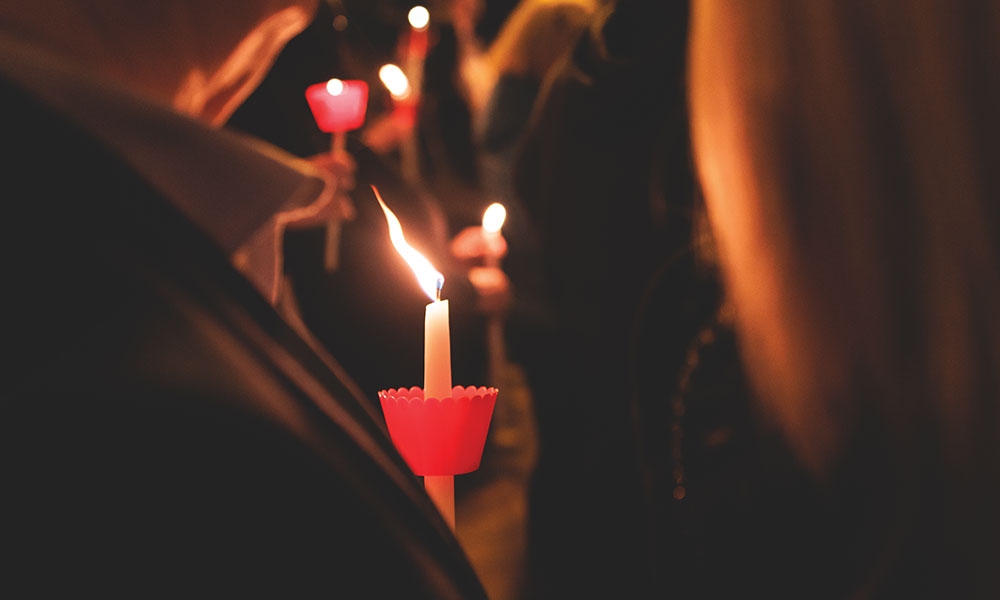
In many ways, the singing of the Exsultet at the Easter Vigil is the climax of the entire liturgical year. As the final piece of the Lucernarium, the great liturgy of light (including the great Paschal fire, the lighting of the Paschal candle and the sharing of its light to all the baptized), we hear this great hymn proclaiming the wonders of what God has done through the death and resurrection of Christ.
In many ways, the singing of the Exsultet at the Easter Vigil is the climax of the entire liturgical year. As the final piece of the Lucernarium, the great liturgy of light (including the great Paschal fire, the lighting of the Paschal candle and the sharing of its light to all the baptized), we hear this great hymn proclaiming the wonders of what God has done through the death and resurrection of Christ.
This is the night
Jesus’ crucifixion and death took place during the Jewish celebration of the Passover. On the night before he died, Jesus celebrated the Passover meal with his disciples. (Lk 22:15) It’s no surprise, then, that the saving work of Jesus’ death and resurrection is interpreted as the new and definitive Passover: “These, then, are the feasts of Passover, in which is slain the Lamb, the one true Lamb, whose Blood anoints the doorposts of believers,” the Exsultet proclaims.
In the Jewish celebration of the Passover, as part of the telling of the story of God delivering Israel from slavery in Egypt, four questions are asked. Each question reflects on a different element of the seder celebration itself and explores how this night is different from all other nights. Reminiscent of these questions, the Exsultet includes several lines in which the priest, deacon or cantor announces, “This is the night…”
- “This is the night, when once you led our forebears, Israel’s children, from slavery in Egypt and made them pass dry-shod through the Red Sea.”
- “This is the night that with a pillar of fire banished the darkness of sin.”
With these lines (and many others later in the hymn), we are invited to remember what God has accomplished in Christ’s death and resurrection. That remembering (what the Church calls anamnesis) is not just the recalling of past events, but a way of making them present, here and now, that we might be participants in God’s saving work. By singing “This is the night” – what we really mean is today, God’s work of liberation continues in our midst through these most sacred celebrations.
From death to life
After Pharaoh’s obstinate refusal to release the Israelites from slavery in Egypt, the final plague in the story of the Exodus is the death of the firstborn (see Exodus chapters 11-12). God instructs his people to mark the doorposts and lintels of their homes with the blood of the lamb sacrificed for the Passover meal. Upon seeing this mark, the angel of the Lord passes over the Israelite homes, saving them from death and accomplishing their liberation. An essential part of the story of their freedom is being saved from literal death.
In our modern world, there can be a tendency to think of Jesus’ saving work as being primarily about liberation from sin. While certainly an essential part of his mission, the quintessential proclamation of the Gospel is that we have been delivered from death. The Exsultet tells us that “This is the night, when Christ broke the prison bars of death and rose victorious from the underworld,” and ends by proclaiming Christ’s “coming back from death’s domain.” Because of Christ’s saving work, death no longer has power over us.
God forms a people
The story of the Passover and Exodus from Egypt is a defining moment in Israel’s history. God set the Israelites free from slavery in Egypt and led them to their new home by a pillar of fire by night and a pillar of cloud by day. In the wilderness, God gave them the 10 Commandments that they may learn to live as God’s Chosen People.
So, too, the death and resurrection of Jesus define us as Christians. We are led by our own “pillar of fire” – Christ himself, the light of the world. Having been enlightened by baptism (the ancient Church called baptism “enlightenment,”), we are to live as God’s holy people: “This is the night that even now, throughout the world, sets Christian believers apart from worldly vices and from the gloom of sin, leading them to grace and joining them to his holy ones.”
For those able to attend the Easter Vigil this year, listen closely to all that is proclaimed in this beautiful hymn. May it remind us that we, too, have been set free from death and sin to live as God’s holy people.