St. Clement I of Rome
c. AD 35-100 | Feast day: Nov. 23
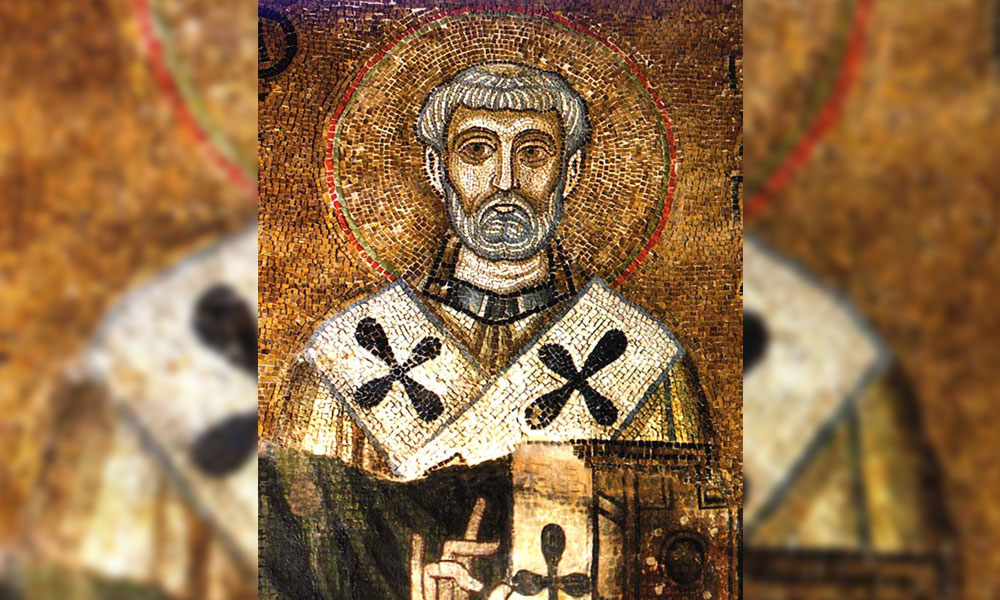
Although many Catholics may be unfamiliar with the life of St. Clement of Rome, we have all heard his name at Mass. In Eucharistic Prayer I of The Roman Missal, we hear a list of the popes and martyrs of the early Church: “Linus, Cletus, Clement, Sixtus, Cornelius…” That Clement is the one we celebrate today.
Because he lived in the first century AD, there isn’t much known about him. While early Church historians differ on the details, we do know that Clement was an early successor to St. Peter. He is considered the first of the “Apostolic Fathers” – the earliest writers and theologians who shaped the first few centuries of the Church’s life.
Tertullian (AD 155-220) wrote that Clement had been ordained by St. Peter himself. Eusebius (c. AD 260-339) mentioned Clement as the “co-laborer” of St. Paul, given his reference to a Clement in his Letter to the Philippians: “Yes, and I ask you … to help them, for they have struggled at my side in promoting the gospel, along with Clement and my other co-workers.” (Phil. 4:3) More recent scholarship suggests St. Paul’s reference to Clement was referring to someone else. Regardless, what emerges is a picture of a man who had very close ties to the Apostles.
His letter to the Corinthians (written c. AD 95-97 ) is contemporaneous with many early Christian texts that now make up the Bible. In fact, Clement’s letter to the Corinthians was read in some early Christian communities alongside the letters of St. Paul, a clear indication of its perceived authority. This letter is one of the clearest and earliest witnesses to apostolic succession and to the authority of the Bishop of Rome. As such, it bears witness that these teachings have always been a part of apostolic faith and are not a later invention.
St. Clement was martyred in AD 99 or 100 during the reign of Emperor Trajan. According to tradition, his relics were later brought by Cyril of Rome to rest in the beautiful Basilica of San Clemente in Rome, which features an exquisite underground archaeological complex with ruins dating back to the 1st century.